
With load shedding and voltage instability affecting residential areas and businesses across Bangladesh, having an uninterrupted, reliable power source is essential. However, walking into a showroom and picking a random generator often leads to either overload failures or unnecessarily high fuel costs.
Step 1: Calculate Your Essential Electrical Load
Every appliance has two types of wattage requirements: Running (Rated) Watts and Starting (Surge) Watts. Induction motors—such as those found in air conditioners, refrigerators, and water pumps—require up to 2 to 3 times their continuous power when first starting up.
Always choose a generator with at least 20% to 25% surplus capacity above your total calculated load. Running an engine continuously at 100% capacity accelerates wear and increases fuel consumption.
Step 2: Choose the Optimal Fuel Type
Depending on location, convenience, and runtime hours, you can choose from:
- Petrol (Gasoline): Ideal for portable and domestic backup (2 kW to 11 kW). Easy recoil or electric start, readily accessible fuel, and lower initial purchase cost.
- Dual Fuel (LPG / Petrol): Connects to ordinary domestic 12kg LP gas cylinders. Reduces operating cost by up to 40% compared to petrol, with cleaner emissions and zero carburetor gumming.
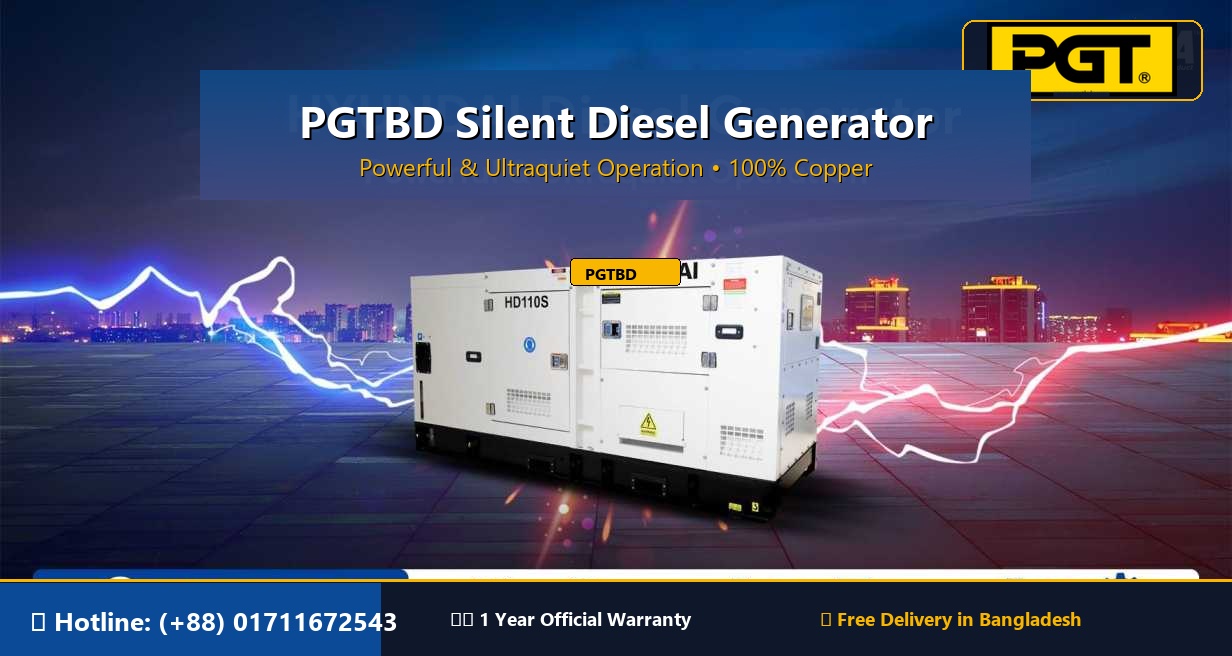
- Diesel Generator: Best for commercial enterprises, factories, and prolonged continuous runs (10 kVA to 500+ kVA). Lowest fuel cost per kilowatt-hour.
Step 3: Decide on Starting System (Recoil vs. Electric vs. Auto ATS)
For uninterrupted convenience during office hours or late-night power cuts, an Automatic Transfer Switch (ATS) is strongly recommended. The ATS automatically senses when the DESCO/DPDC grid fails and starts the generator within 5 to 10 seconds. When mains power returns, it safely switches back and shuts down the engine.
About PGT & PGTBD Power Technical Desk
Our engineering team provides free load calculation, site inspections, and customized generator installations across Bangladesh. Contact hotline: (+88)01711672543.